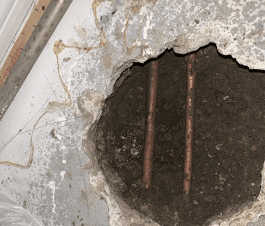
When homeowners hear the phrase “plumbing under the slab,” it often sparks immediate concern. Slab foundations are common in states like Texas, Colorado, and across much of the southern U.S., and while they offer stability and efficiency, they also bring unique challenges. One of the most important things to understand is that your foundation and your plumbing system are directly connected.
If a leak or repair is needed beneath your home’s slab, you’re not just dealing with pipes—you may also encounter concrete footers, rebar reinforcement, and structural anchor points that are integral to the stability of your house. Knowing how these systems work together can save you time, money, and stress when it comes to repairs.
In this guide, we’ll break down:
How your foundation and plumbing system are interrelated Why slab leaks happen and how they’re diagnosed The role of concrete footers and anchor points in under-slab work The step-by-step process of plumbing repair under a slab The risks of ignoring foundation-related plumbing issues Preventive strategies to protect both your foundation and plumbing system
The Foundation–Plumbing Connection
Your home’s plumbing system doesn’t exist in isolation—it’s built into the very framework of your foundation. In a slab-on-grade home, water supply and drain lines run directly through or beneath the concrete slab.
Water supply lines (often copper, PEX, or CPVC) typically run under the slab and rise up into walls to serve fixtures. Drain and sewer lines are often embedded in trenches beneath the slab before the concrete is poured, connecting your home to the municipal sewer or septic system.
Because these pipes are encased in or under concrete, any movement in the foundation—whether from shifting soil, settling, or moisture changes—can directly affect the plumbing system. Likewise, a leaking pipe can undermine the soil beneath the slab, leading to foundation instability.
In short: foundation health and plumbing health go hand-in-hand.
Why Slab Leaks Happen
A slab leak occurs when a pipe running under or through the concrete slab develops a break. Common causes include:
Soil movement: Expansive clay soils (common in Dallas and Denver) expand when wet and contract when dry, putting stress on pipes. Pipe corrosion: Older copper or galvanized pipes are prone to corrosion, leading to pinhole leaks. Poor installation: Improperly bedded pipes can rub against rocks or concrete, wearing down over time. Foundation settling: Shifts in the slab can put strain on joints or bends in plumbing lines.
Symptoms of a slab leak include:
Unexpectedly high water bills Hot spots on floors (for hot water line leaks) Cracks in walls or floors The sound of running water when no fixtures are on Pools of water around the home’s foundation
The Role of Concrete Footers and Anchor Points
When a plumber must access and repair pipes under your slab, they don’t just face concrete. Modern slab foundations are designed with reinforcement systems to ensure structural integrity.
1. Concrete Footers
Footers are wide, deep sections of concrete around the perimeter of the home, sometimes under load-bearing walls, that help distribute the home’s weight. These areas are thicker and harder to break through than standard slab sections. If a pipe runs beneath or near a footer, excavation becomes more complex.
2. Anchor Points
Many slabs are reinforced with rebar and anchor points that tie the slab to the ground or other structural components. When cutting into the slab for plumbing repair, these anchors must be identified to avoid weakening the foundation.
3. Post-tension Cables
In some modern foundations, post-tension cables run through the concrete to strengthen it. Cutting into these can be dangerous and structurally damaging. Any plumber working under your slab must locate these before jackhammering.
Takeaway: Not every under-slab repair is as simple as cutting concrete and patching a pipe. The presence of footers, anchor points, and reinforcements can significantly affect the time, cost, and method of repair.
The Process of Under-Slab Plumbing Repair
When foundation and plumbing intersect, the repair process requires precision. Here’s a typical step-by-step breakdown:
Step 1: Leak Detection
Professionals use tools like electronic acoustic leak detectors, thermal imaging cameras, or tracer gas to locate the exact point of failure. Accurate diagnosis prevents unnecessary demolition.
Step 2: Marking Structural Elements
Before cutting concrete, plumbers identify footers, rebar, and post-tension cables to avoid damaging the foundation.
Step 3: Breaking Through the Slab
Using a jackhammer or concrete saw, a section of slab is removed. If the leak is under a footer, this step becomes more time-consuming, requiring specialized equipment and techniques.
Step 4: Excavation
Soil beneath the slab is carefully removed until the leaking pipe is exposed.
Step 5: Pipe Repair or Replacement
Small leaks may be repaired with couplings or epoxy. Larger issues may require rerouting—abandoning the failed section and running new piping around the slab instead.
Step 6: Soil Replacement and Compaction
Backfill is replaced and compacted to avoid future settling under the slab.
Step 7: Concrete Patching
High-strength concrete is poured to restore the slab. For areas near footers or anchor points, reinforcement is often reintroduced to maintain structural strength.
Risks of Ignoring Slab-Related Plumbing Issues
Delaying repairs under the slab can lead to significant—and expensive—problems:
Foundation instability: A leaking pipe can wash away soil, creating voids under the slab. Cracked floors and walls: Uneven support can stress the slab, leading to visible damage inside your home. Mold and mildew: Moisture buildup under flooring can create unhealthy living conditions. Escalating repair costs: What starts as a minor leak can evolve into structural repairs costing tens of thousands of dollars.
Alternatives to Breaking Through the Slab
In some cases, plumbers may avoid cutting through footers and anchor points altogether by recommending alternative repair strategies:
Pipe Rerouting: Running new lines overhead through walls, ceilings, or attics instead of under the slab. Trenchless Repairs: Techniques like pipe lining or pipe bursting can sometimes be used to rehabilitate pipes without major excavation. Bypass Systems: Installing new exterior lines around the perimeter of the slab.
These methods can be less disruptive and more cost-effective, depending on the situation.
Preventing Foundation and Plumbing Conflicts
While you can’t control soil movement or natural settling, there are steps to protect your home:
Regular Plumbing Inspections – Annual camera inspections of drain lines and pressure tests for water supply can catch issues early. Monitor Water Pressure – High water pressure can stress under-slab pipes. Install a pressure regulator if necessary. Foundation Watering Systems – In clay-heavy regions, keeping soil moisture consistent helps reduce slab movement. Address Drainage Issues Promptly – Gutters, downspouts, and grading should direct water away from the foundation. Use Licensed Professionals – Never let unqualified workers cut into your slab without proper training in structural safety.
Choosing the Right Professional
Because under-slab repairs touch both plumbing and structural integrity, it’s critical to hire the right team:
Look for Licensed Master Plumbers with experience in slab leak repair. Ask whether they use electronic leak detection equipment. Confirm they are trained to work around post-tension cables and concrete footers. Request references and check reviews for experience with under-slab work in your region.
Final Thoughts
Your home’s foundation and plumbing system are inseparably connected. When a leak develops under your slab, the repair is more than a plumbing job—it’s a structural consideration. Concrete footers, anchor points, and reinforcement systems must be respected to keep your home stable and safe.
By understanding this relationship, you’ll be better prepared to:
Recognize early warning signs of slab leaks Understand why repairs may be complex or costly Protect both your plumbing and your foundation from future damage
plumbing under slab slab leak repair concrete footer plumbing foundation and plumbing relationship under slab pipe replacement post-tension cable plumbing repair slab leak detection Dallas / Denver foundation plumbing repair