
Gas lines play a vital role in supplying fuel for heating systems, water heaters, cooking appliances, and more. Because natural gas and propane are flammable and potentially dangerous, proper installation and testing of gas piping is essential to ensure safety. The International Plumbing Code (IPC) sets specific rules for gas leak pressure testing that plumbers, contractors, and inspectors must follow. This article explains what the IPC requires, how testing is performed, and why it’s such a critical step in protecting homes and businesses.
What the IPC Says About Gas Leak Pressure Testing
Under the IPC, any new gas piping installation or repair must undergo a pressure test before being placed into service. The purpose of this test is to verify that all joints, fittings, and pipes are leak-free and capable of safely handling the required operating pressure. Here are some key IPC requirements:
Test Before Use – The entire system must be tested before connecting appliances or turning on the gas supply. Test Medium – The test must be done with air, nitrogen, or another approved inert gas. Gasoline, propane, or natural gas cannot be used as a test medium because of the risk of fire or explosion. Test Pressure – Most residential gas systems are tested at not less than 1.5 times the proposed maximum operating pressure, but no less than 3 psi (pounds per square inch) for residential systems. Duration of Test – The system must maintain that pressure for at least 10 minutes, with no drop in pressure allowed during that time. Proper Gauges – A pressure gauge approved for low-pressure testing must be used. These gauges are usually graduated in increments no greater than 0.1 psi to detect even the smallest leaks. Inspector Verification – The test must be witnessed by the local code inspector or authority having jurisdiction before the gas can be turned on.
How a Pressure Test is Performed
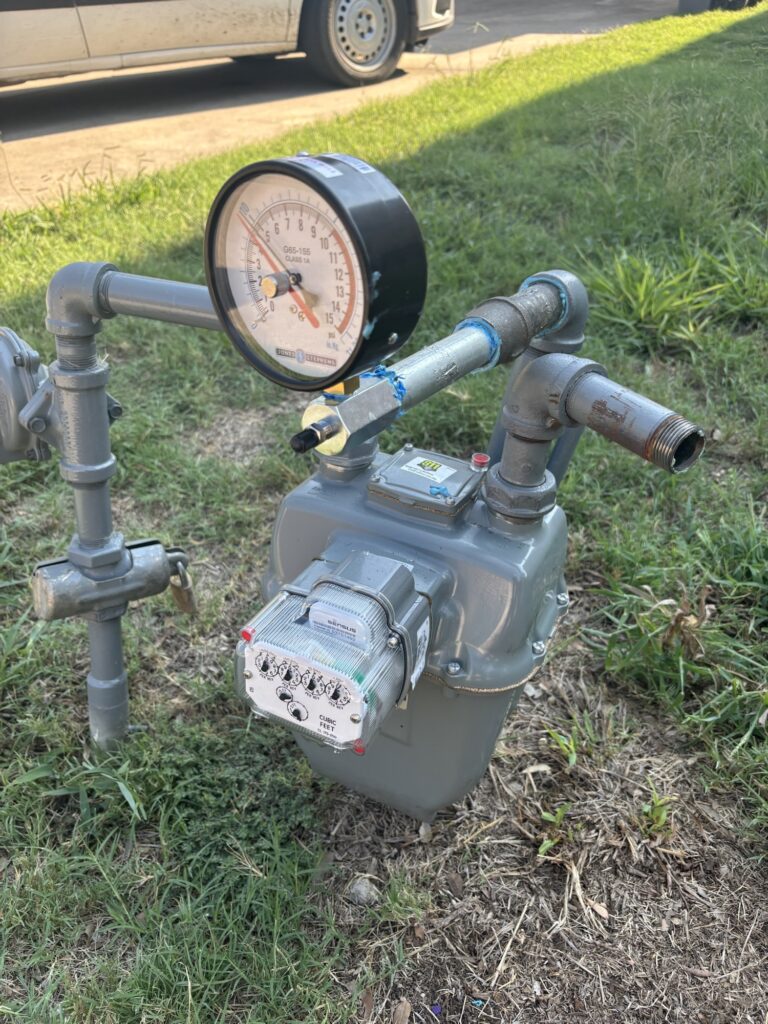
During the test, plumbers seal the piping system using threaded caps or test plugs, then pressurize the system with air or nitrogen to the required pressure. A gauge is attached to monitor the reading. Over the course of the test period, the gauge must remain steady. Any drop in pressure means there is a leak, which must be located and repaired before retesting.
For larger systems, plumbers may isolate sections to make troubleshooting easier. Once the system passes inspection, it is then safe to connect appliances and open the gas valve.
Why This Test is Critical
Gas leaks are extremely dangerous. Even a small, undetected leak can lead to:
Explosion or fire hazards Health risks from inhaling natural gas or carbon monoxide Higher utility bills due to wasted gas Costly damage to structures and appliances
By following IPC pressure testing requirements, plumbers and inspectors ensure that the gas system is completely sealed and safe before it goes into service. This protects homeowners, tenants, and businesses from potentially catastrophic situations.
Final Thoughts:
Gas leak pressure testing isn’t just a code requirement—it’s a lifesaving safety measure. Whether you’re installing a new line or repairing an old one, following IPC rules ensures that your system is reliable, efficient, and most importantly, safe.